
Are you having a tough time understanding the process of writing a dissertation methodology?
I will break it down for you in this blog. I will share steps, expert tips, and real examples which you can use to build a repeatable, defensible research methodology.
What Is Dissertation Methodology?
A dissertation methodology is a systematic plan detailing how you conduct research for your dissertation. It covers your research design, data collection methods, analysis techniques, and ethical considerations. Your methodology section in dissertation is the only place where you can justify every choice you have made regarding the design to your committee.
Why Is Writing a Dissertation Methodology Important?
The methodology part of the dissertation acts like the defence for your claims in the paper. Without it, your results look random. I have seen students lose marks because of a missing logic in their dissertation methodology structure.
If your methods are weak, it could kill your findings even if they are good. Transparent methods, on the other hand, save them. Moreover, it has become quite easier for universities these days to figure out if the dissertation methodology in a paper is strong or shallow with the help of AI detectors. So, my advice to everyone is, take your writing a methodology dissertation seriously. Show your work step by step.
How To Write a Research Methodology for Dissertation?
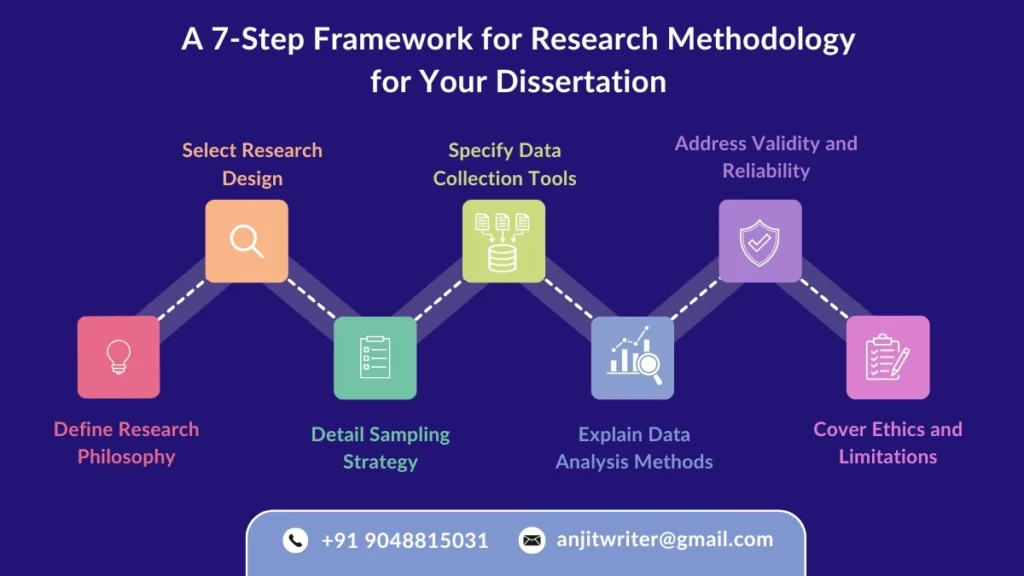
Writing a methodology section for dissertation demands a strategy. I can recommend you using a 7-step system to satisfy your supervisors and external examiners through a dissertation methodology sample.
Define Research Philosophy: State your epistemological stance first. If it is quantitative surveys, positivism suits it. Interpretivism works best for qualitative interviews. Your dissertation methodology must align philosophy with research questions.
Select Research Design: The next important step is choosing your research design, which works best for your dissertation topic and objectives. You may choose between experimental, case study, or mixed methods design. It is the selection of the right design that helps data quality.
Detail Sampling Strategy: Explain population, sample size, and selection technique. Purposive sampling works for niche studies. Random sampling helps in generalizability. Clarity here is quite important in writing research methodology for dissertation that looks impressive.
Data Collection Tools: Specify what type of data collection tools you relied on. Surveys, interviews, or lab protocols are common tools. Also, include instrument validation steps. Lack of detailing about the tool could cost you approval. I have many students clients who had such dissertation methodology examples.
Explain Data Analysis Methods: Another important step in writing the methodology section of a dissertation is matching the analysis to the data type. Use SPSS for quantitative and thematic coding for qualitative. Your dissertation methodology must show how results will emerge from raw data.
Address Validity and Reliability: Approval committees expect you to address the validity and reliability of your data. Describe triangulation, pilot testing, and bias control. My dissertation methodology help include designing validity checks to avoid criticism during viva voce.
Cover Ethics and Limitations: Talk about the steps you have taken for consent, confidentiality, and approval boards. Admit scope limits as well. Being honest about the ethics and limitations makes your research methodology for dissertation defensible and professional.
Pro Tips to Write a Powerful Dissertation Methodology
After reviewing over 1500 dissertations for clients as part of dissertation help services, I collected these six non-negotiable strategies for writing a dissertation methodology. Use them in your writing to make committees approve your draft faster.
Mirror Your Department Guidelines: Align every heading with your university rubric. Examiners check compliance first.
Justify, Don’t Just Describe: Give reasons for each choice. Why interviews over surveys? Justification shows mastery.
Use Past Tense for Completed Work: Write ‘data was collected’ instead of ‘will be.’ Using the past tense while writing a dissertation methodology confirms execution.
Add a Methodology Diagram: Visual flowcharts are powerful tools to clarify complex designs. I have noticed that approval committees appreciate the visual dissertation methodology structure.
Preempt Examiner Questions: No dissertation is 100% perfect, and the committee knows that. Address limitations before they ask. Proactive writing shows scholarly maturity.
Get External Review Early: Don’t hesitate to seek dissertation methodology help if you feel your draft is weak or if you are not confident. They could catch the fatal gaps you missed.
Conclusion
Writing a dissertation methodology is equal to proving your research’s credibility, logic and academic soundness. I hope the inputs shared in this blog, as well as the steps and tips, will guide you.
If you found this blog helpful, feel free to share it with your colleagues and classmates. Also, don’t forget to comment on your feedback below.